
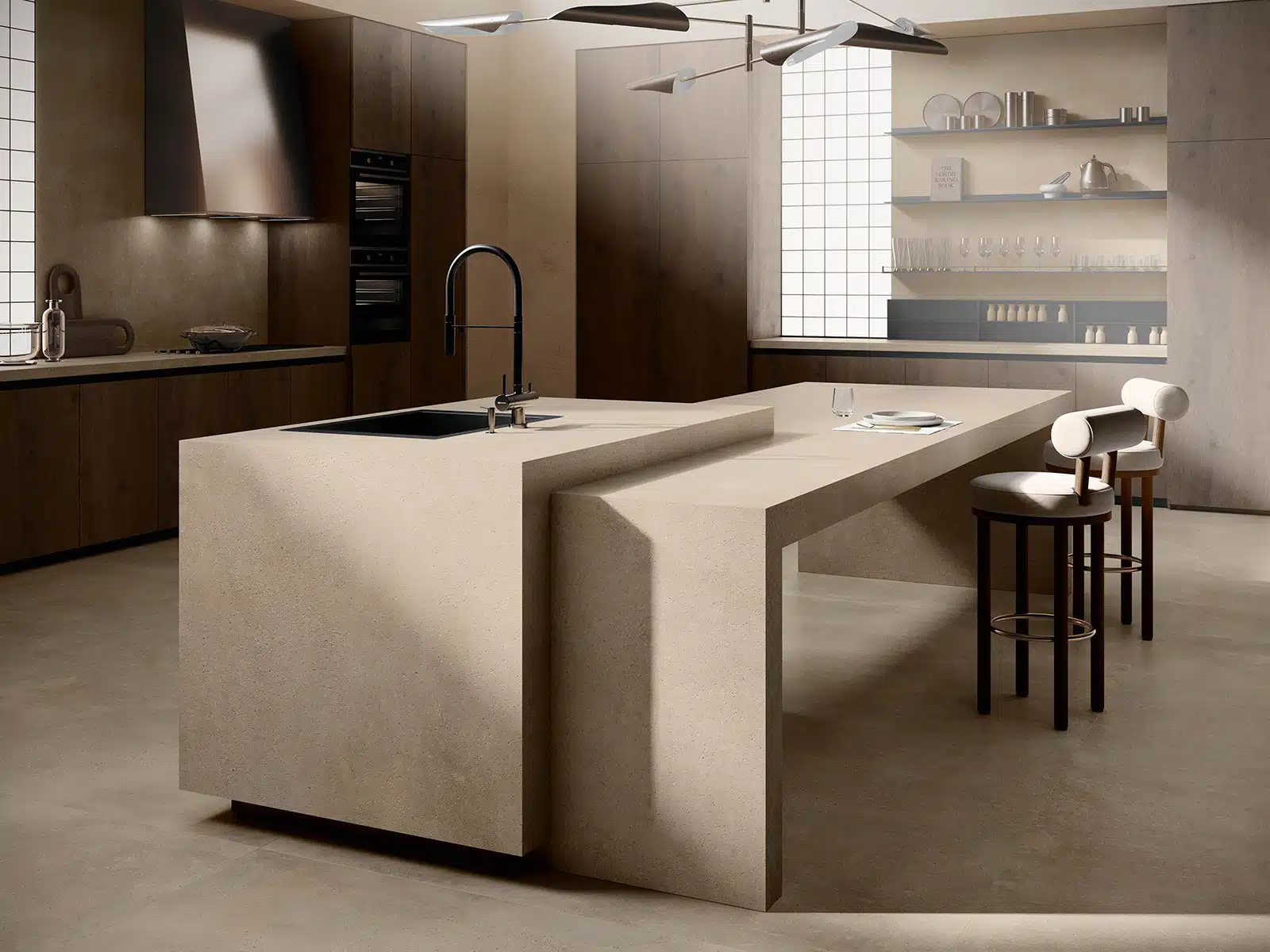
Find out which one to choose
When designing a kitchen, choosing the countertop is one of the most important decisions. It not only influences the aesthetics of the space but also its durability, resistance, and functionality. There are different types of kitchen countertops, each with distinct properties and finishes, so understanding their advantages is essential for choosing the most suitable one.
In this guide, we review the main types of stone for kitchen countertops and analyze which type of countertop is best suited to your needs.
1. Granite countertops
Granite has been one of the most popular choices for years due to its high resistance to heat, impacts, and scratches. It is a natural stone with a timeless aesthetic, available in a wide range of colors and unique veining patterns.
Advantages:
- High durability and heat resistance.
- Easy maintenance.
- Natural and elegant finish.
Disadvantages:
- Porous material that may require periodic sealing.
- High weight.
2. Marble countertops
Marble is synonymous with sophistication. Its texture and shine lend a classic and exclusive touch, although it requires more careful maintenance due to its porosity and sensitivity to acids.
Advantages:
- Unparalleled aesthetic elegance.
- Cool surface, ideal for baking or gourmet cooking.
Disadvantages:
- Prone to stains and scratches.
- Requires regular maintenance.
3. Quartz countertops
Quartz is a synthetic material composed of natural minerals and resins. It has become one of the most practical options thanks to its low porosity and wide variety of colors and finishes.
Advantages:
- No sealing required.
- Highly resistant to stains and bacteria.
- Uniform and customizable finish.
Disadvantages:
- Sensitive to direct high temperatures.
- It is not 100% natural stone.

4. Porcelain or sintered stone countertops
Sintered stone countertops have positioned themselves as one of the most advanced options on the market. Manufactured from natural minerals compacted at high temperatures, they combine the best of nature with technological innovation.
At Venux Surface, we work with sintered surfaces that stand out for their extreme resistance, color stability, and cutting-edge design.
Advantages:
- High resistance to heat, scratches, stains, and UV rays.
- Hygienic and 100% recyclable material.
- Wide variety of textures, from marble to cement or metal.
Disadvantages:
- Professional installation is essential.
- The price is slightly higher than other materials, but this is offset by its durability.
Discover the differences between sintered stone and granite.

5. Laminate or wooden countertops
Laminate countertops are an economical alternative, while solid wood countertops offer warmth and a natural look. However, both require more frequent maintenance and are less resistant to water and heat.
Advantages:
- Competitive price (laminate).
- Aesthetic warmth (wood).
Disadvantages:
- Less resistance and durability.
- Susceptible to moisture and heat.

Which type of countertop is best?
The answer depends on the use, style, and priorities of each kitchen. If you’re looking for maximum durability, contemporary aesthetics, and minimal maintenance, sintered stone is the best choice. It offers a perfect balance between technical performance and design, adapting to both domestic and professional kitchens.
Choosing the perfect countertop involves considering resistance, maintenance, style, and sustainability. Among the different types of kitchen countertops, sintered stone stands out for offering a durable, aesthetically pleasing, and environmentally friendly solution.
At Venux Surface, we treat each surface as a unique piece, designed to inspire kitchens that transcend trends.
