
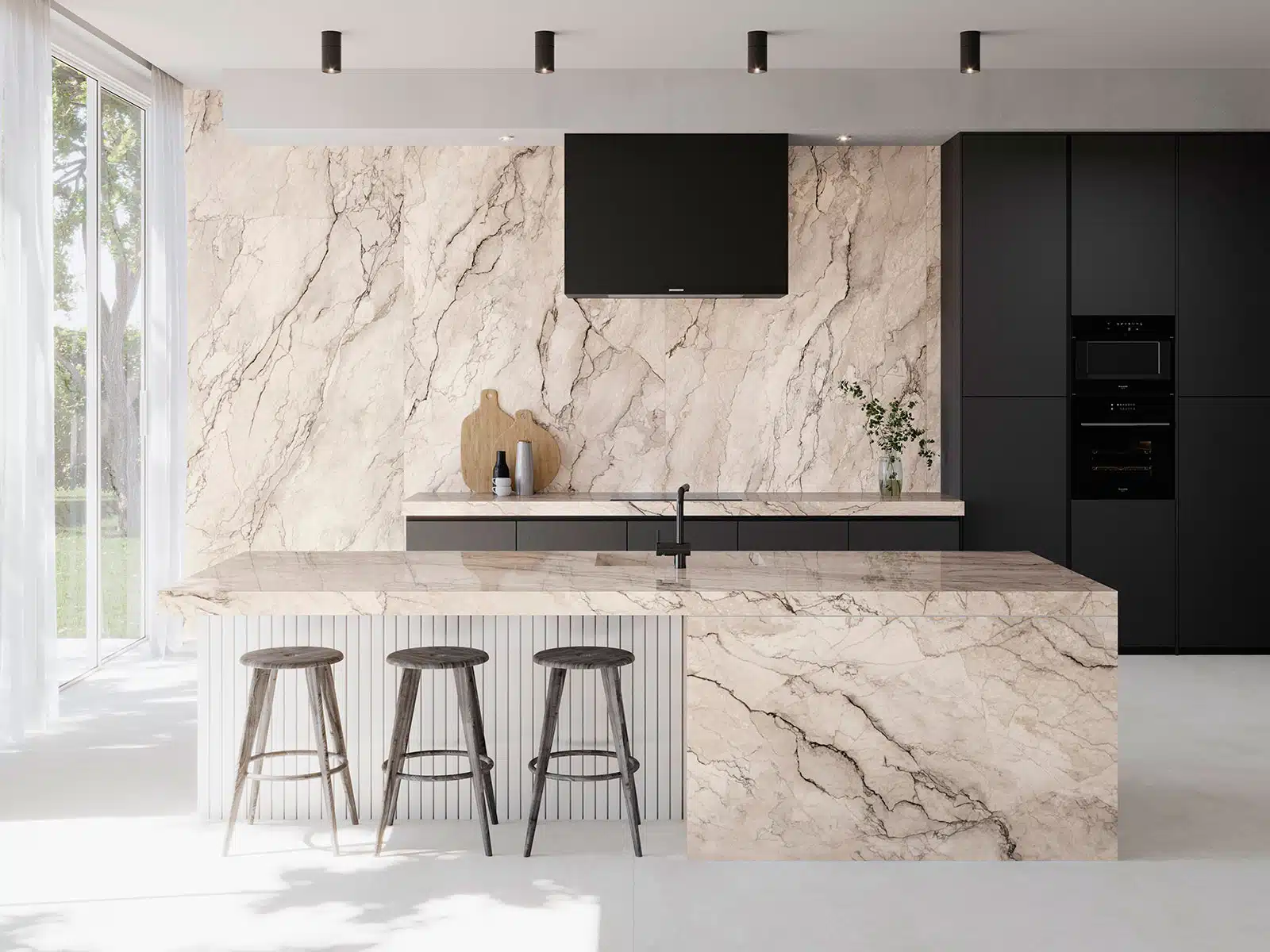
When planning a kitchen, every detail counts.
The choice of material, color, and texture is essential, but there's one aspect that determines both aesthetics and functionality: the dimensions of your kitchen countertop.
In this article, we'll tell you what the standard dimensions are, what factors influence them, and how to correctly measure your countertop to achieve a comfortable, ergonomic space that meets the standards of your project.
What are the standard dimensions of a kitchen countertop?
Although every project is unique, there are reference dimensions that serve as a starting point for designing a balanced and practical kitchen. These measurements are adapted to the furniture, the average user height, and common appliances.
Countertop height
The standard height of a kitchen countertop is usually between 90 and 92 cm, measured from the floor to the work surface.
This value can vary slightly depending on the furniture or the height of the people who will use it most frequently. In custom projects, it is recommended to adjust it a few centimeters up or down to improve ergonomics.
Countertop depth or width
The width of a kitchen countertop (also called depth) is usually 60 cm, as it coincides with the standard depth of base cabinets and most integrated appliances.
However, in larger kitchens or designs with countertops for islands and peninsulas, it is common to increase this measurement to 65 or 70 cm, which offers a larger work surface and a more robust visual appearance.
Countertop thickness
The thickness can vary depending on the material and desired style:
- 1.2 cm – 2 cm: current trend, minimalist and modern aesthetic.
- 3 cm – 4 cm: more solid and traditional look.
- Over 6 cm: countertops with a thick edge or solid effect, commonly used in contemporary kitchen designs.
In the case of sintered stone, the most common thickness is between 12 mm and 20 mm, although it can be customized according to the project’s needs.
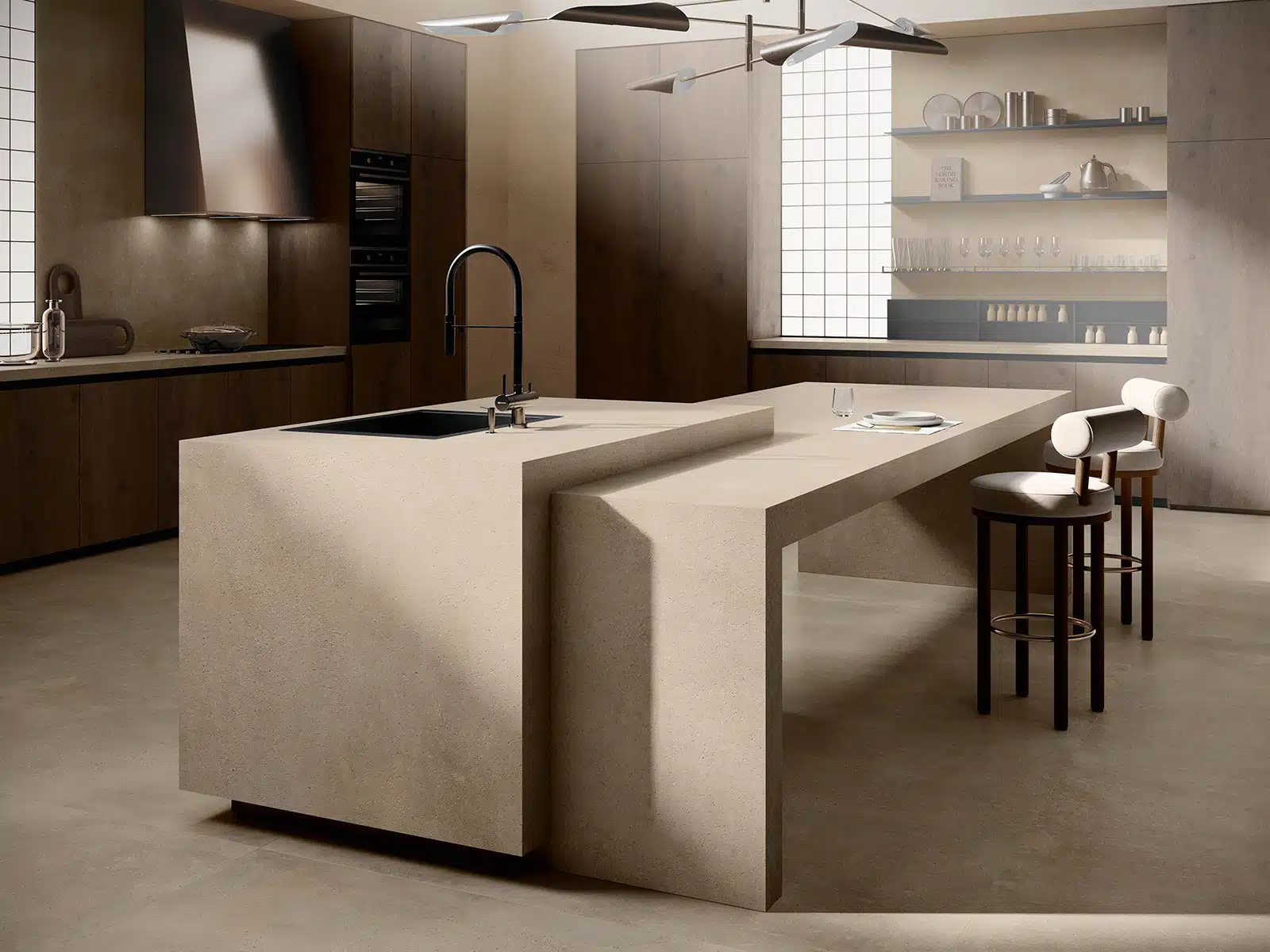
How to measure a kitchen countertop correctly
Before manufacturing or installing a countertop, it’s essential to take precise measurements of the available space. Accurate measurements will prevent errors in cutting and joining, ensuring a perfect finish.
Follow these steps to do it correctly:
- Measure the total length of the surface where the countertop will be installed, including corners or extensions, if any.
- Note the depth (from wall to front edge). In kitchens with irregular walls, measure at several points to ensure accuracy.
- Mark the openings where the sink, cooktop, or electrical outlets will go. It’s important to consider the minimum space between them for comfortable working.
- Check that the corners are square, especially if it’s an L-shaped or U-shaped kitchen.
- Check that the cabinetry is level. The countertop must rest on a firm and even surface.
Pro tip: if you’re installing a sintered stone countertop, entrust the measuring and cutting to a specialist. This type of material requires specific tools to guarantee millimeter precision and avoid stress during installation.

Sintered stone: precision and versatility in every size
One of the advantages of sintered stone is its high dimensional stability. Thanks to its composition and manufacturing process, it maintains perfect flatness even in large formats, allowing for seamless countertops with millimeter-precise custom dimensions.
At Venux Surface, we work with large-format slabs that adapt to all types of projects, offering complete freedom to define:
- Seamless countertops with no visible joints.
- Custom thicknesses according to the design.
- A perfect fit in complex spaces or with irregular angles.

The importance of precise measurements for a functional kitchen
Choosing the right kitchen countertop dimensions is key to achieving a functional, aesthetically pleasing, and long-lasting kitchen. Whether you're looking for a minimalist or a more robust design, sintered stone offers the precision, strength, and elegance needed to create a space that will stand the test of time.
At Venux Surface, we advise you every step of the way: from material selection to final manufacturing and installation, guaranteeing a flawless result tailored to your project.